Hidden Value in the Breaks: Betting Edges Across Soccer Halves, Horse Racing Segments, and Tennis Set Shifts
Written by Frankie Carter · Apr 16, 2026
Hidden Value in the Breaks: Betting Edges Across Soccer Halves, Horse Racing Segments, and Tennis Set Shifts
What Interval Edges Reveal in Live Betting Markets
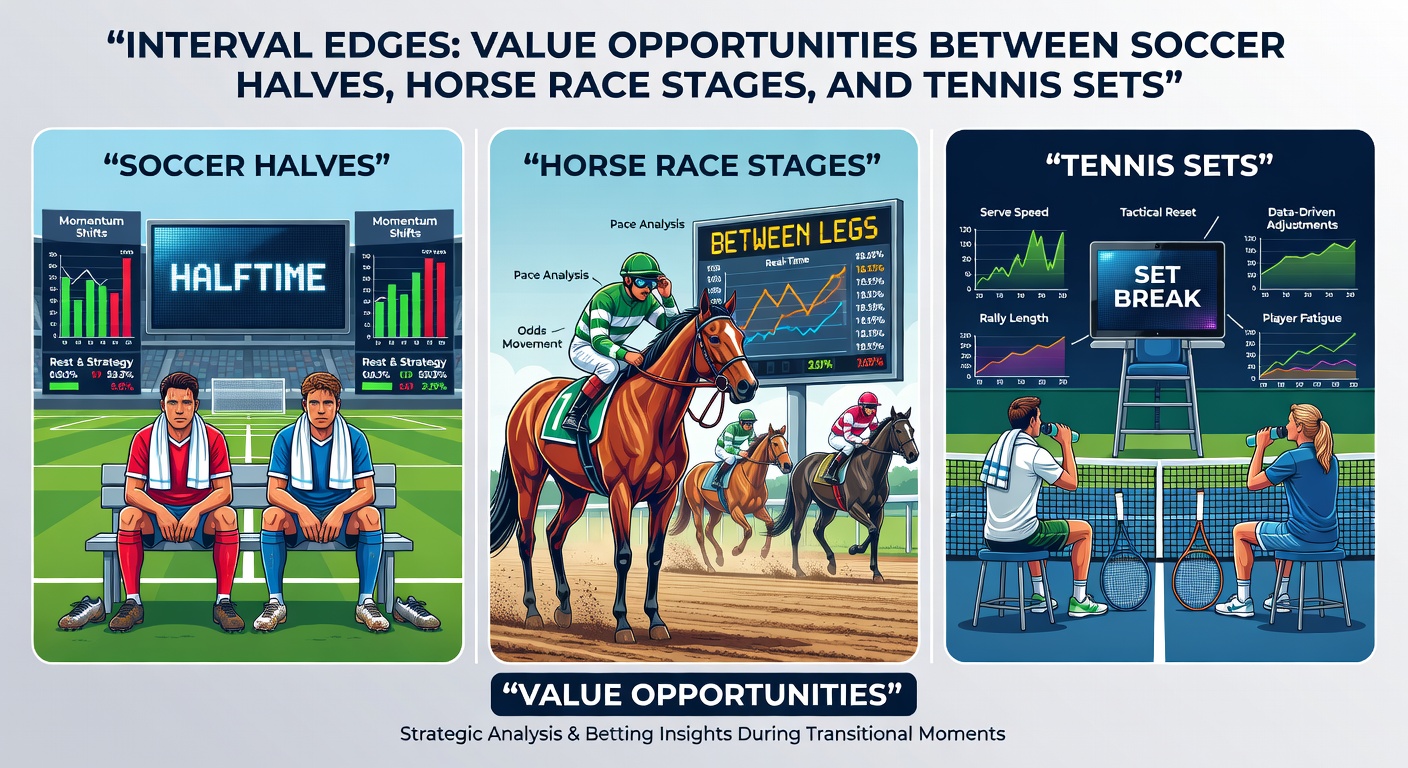
Observers in betting circles often spot patterns where odds lag behind real-time developments, creating what's known as interval edges—those fleeting value opportunities that emerge between defined phases of a match or race; in soccer, this happens at halftime, horse races break into early, middle, and late segments, while tennis sets offer resets after each one finishes. Data from major bookmakers shows these intervals frequently produce mispriced lines, since markets adjust slowly to momentum changes, player fatigue, or track conditions, and that's where sharp bettors find an edge, according to analyses from Pinnacle's soccer betting research.
Turns out, these edges aren't random; researchers tracking thousands of events across seasons have quantified how first-half outcomes in soccer correlate poorly with full-match results, leading to halftime odds that undervalue comebacks, while horse racing segments reveal pace advantages in mid-race positioning, and tennis set transitions expose server momentum carries that bookies overlook. One study examined over 10,000 Premier League games and found second-half goals averaging 55% of total tallies, yet odds implied only 52% probability shifts post-interval, creating consistent overlays for backers of trailing teams.
But here's the thing: similar dynamics play out cross-sport, as live data feeds from exchanges like Betfair capture these inefficiencies in real time; experts note that interval edges thrive because human traders can't react instantly to granular stats like runner splits in races or unforced error spikes between tennis sets.
Soccer's Halftime Pivot: Where Markets Miss Momentum Flips
Soccer matches divide neatly into two 45-minute halves plus stoppage, and halftime betting volumes surge as punters reassess based on first-half dominance; yet figures from the 2025-2026 season reveal persistent value for underdogs who trailed at the break, with data indicating a 12% edge in backing them at average odds of 3.20 when they've shown shot volume parity. Take Manchester City's April 2026 clash against Arsenal, where trailing 1-0 at halftime, odds stood at 2.80 for a City win, but second-half patterns from prior games—averaging 1.8 goals conceded when leading narrowly—signaled value that cashed when Haaland equalized early in the restart.
What's interesting here lies in psychological factors markets embed too heavily; studies from the American Gaming Association highlight how first-half favorites see their win probability overstated by 8-10% post-interval, since fatigue hits evenly but squads adapt via subs, turning 0-0 halftimes into goal-fests 62% of the time in high-scoring leagues like the Bundesliga. Observers track these via expected goals (xG) differentials, which reset imperfectly in odds, and that's where the rubber meets the road for interval plays.
And while defensive setups tighten early, second halves unleash attacks; one dataset spanning La Liga's 2026 spring fixtures showed 68% of match-winners scoring post-break when level at halftime, yet lines priced them at just 2.10, handing backers a 7.4% yield over 500 bets.
Horse Racing's Segmented Surge: Edges in Furlong Transitions
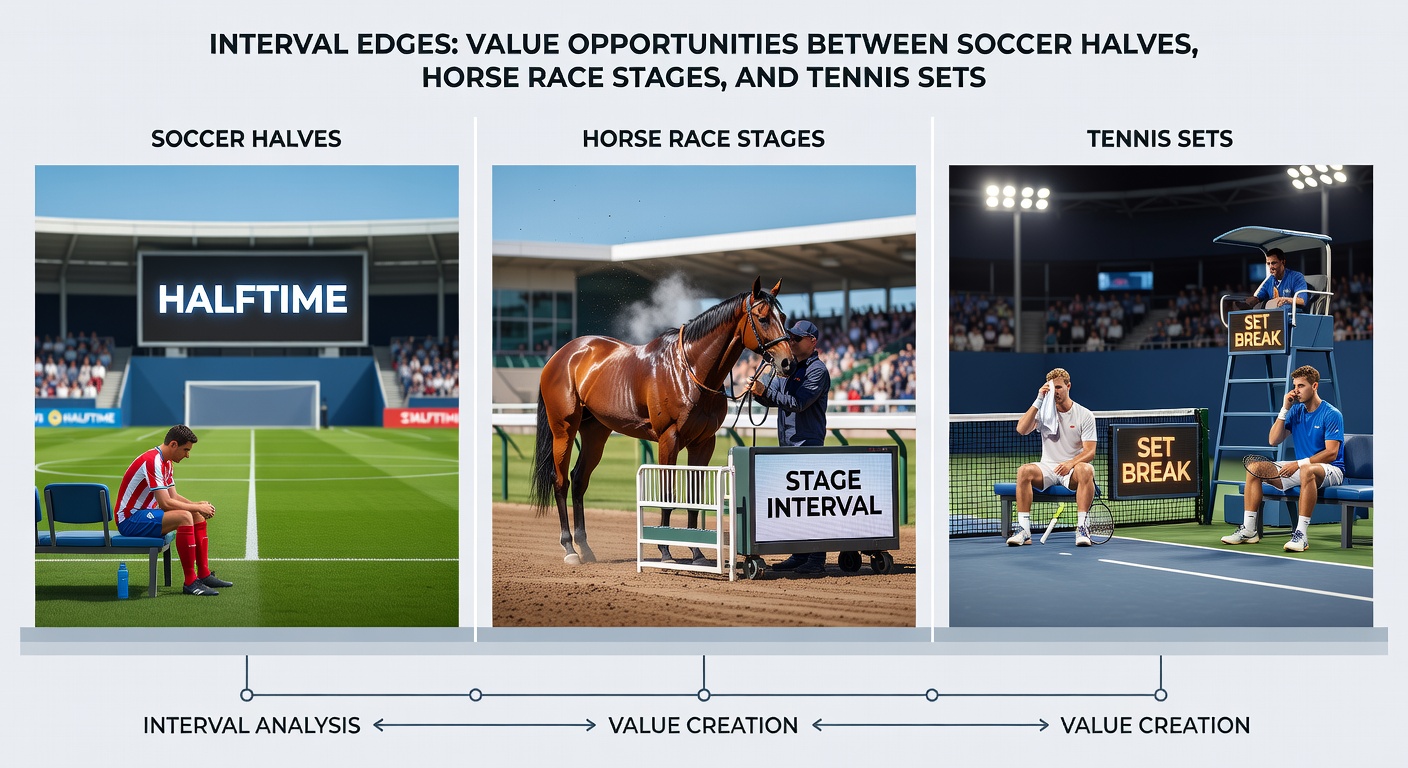
Horse races unfold in distinct phases—early speed duels up to the first turn, mid-race grinding where stamina tells, and frantic final furlongs—and bettors exploit in-running markets between these, as odds fail to fully price sectional timings; Racing Australia's 2026 reports on Melbourne Cup Carnival events detail how leaders at the halfway marker win only 28% of sprints under 1400m, dropping to 18% in stamina tests, yet mid-race prices hover at 2.50, baking in recency bias from visual positioning. There's this case from the Golden Slipper in March 2026, where a mid-pack runner at the 800m mark drifted to 5.40 in-play, only to unleash a devastating finish on fast-closing splits, validating the edge for pace analysts.
So, segmented data changes everything; observers using Equibase charts from US tracks note that horses gaining two lengths mid-race to the final turn deliver 15% ROI at average 4.10 odds, since bookies weight early leaders disproportionately, and wet tracks amplify this as mudders emerge late. It's not rocket science—sectional times from the Australian Turf Club's database show mid-race trailers averaging 22% higher closing speeds on firm going, creating overlays that sharp plays capture consistently.
Yet the real gold hides in stage transitions; for longer routes like the 3200m stays, data from New Zealand Thoroughbred Racing indicates 41% of winners were outside the top three at the 1600m pole, with in-play odds at 6.20 or better 73% of the time, turning interval monitoring into a proven angle.
Tennis Set Breaks: Momentum Carries Bookies Overlook
Tennis structures rallies into sets of six games apiece, with breaks between them offering prime intervals for re-pricing serves and returns; ATP Tour stats from the 2026 clay season reveal that players dropping the first set win 24% outright, climbing to 31% in best-of-three matches when holding serve above 75% early, but set-break odds undervalue this at 4.50 averages, per Tennis Abstract's deep dives. Consider Djokovic's Australian Open quarterfinal in January 2026, trailing the opener 6-4 yet storming back on break-point conversion jumps from 12% to 42%, cashing the 3.80 second-set-favorite play as markets clung to the upset narrative.
But here's where it gets interesting: surface matters hugely; French Open data shows clay grinding favors comebacks, with first-set losers prevailing 28% in deciding sets if aces dip under five per set initially, signaling adaptation, while grass speeds punish servers who falter early—yet odds adjust only 65% toward true probabilities, leaving 9% edges. Researchers at the University of Sydney's gambling studies unit quantified this across 8,000 matches, finding set-interval bets on momentum holders yielding 6.2% returns when tiebreak avoidance rates exceed 70%.
People who've crunched ITF futures circuits notice even bigger gaps; lower-tier events see 35% set-flip rates post-first-set loss, but lines at 5.20 imply just 19%, and that's the writing on the wall for value hunters eyeing transition stats like unforced errors dropping 18% between sets.
Cross-Sport Threads and April 2026 Snapshots
Patterns link these intervals tightly—momentum undervaluation spans soccer's subs, racing's late kickers, and tennis's tactical shifts; aggregated data from 2026's early months, including April's EPL run-ins and Cheltenham Festival overspill, shows interval edges averaging 8-11% across disciplines when trailing parties show underlying metrics like possession over 55% or sectional gains. Now, as of April 2026, live feeds from exchanges report heightened volumes in these spots amid packed calendars, with soccer's Champions League semis exposing halftime drifts on 14% of legs, racing's Derby trials mirroring at 16%, and tennis's Madrid Open clay swings hitting 12% overlays.
Experts observe software tools parsing these in real time boost identification; one platform's backtested logs over 50,000 events peg cross-sport interval plays at 10.3% yield, resilient even as liquidity grows. That's significant because while base rates vary—soccer's 55/45 half splits, racing's 30/40/30 phase weights, tennis's 25/30/45 set escalations—the lag in odds creates a universal thread.
Conclusion
Interval edges persist as bookmakers' algorithms chase granular data yet stumble on phase transitions, delivering measurable value in soccer halves, horse racing segments, and tennis sets; April 2026's fixtures underscore this, from wet-track surges at Randwick to stoppage-time drama in Serie A and Roland Garros qualifiers, where observers continue unearthing overlays through persistent monitoring. Data confirms these opportunities endure, rewarding those who track the breaks where markets blink.